
Lukas Huber
Founder & AI Strategist
AI & ML Conference: Secure tickets for Minds Mastering Machines. What does this mean for Swiss SMEs and their digitalization processes?
Key Takeaways
- ▸KI-Konferenz 'Minds Mastering Machines' findet statt.
- ▸Schweizer KMU kämpfen mit Digitalisierung, verpassen Chancen.
- ▸KI-Innovationen sind für KMU relevant und entscheidend.
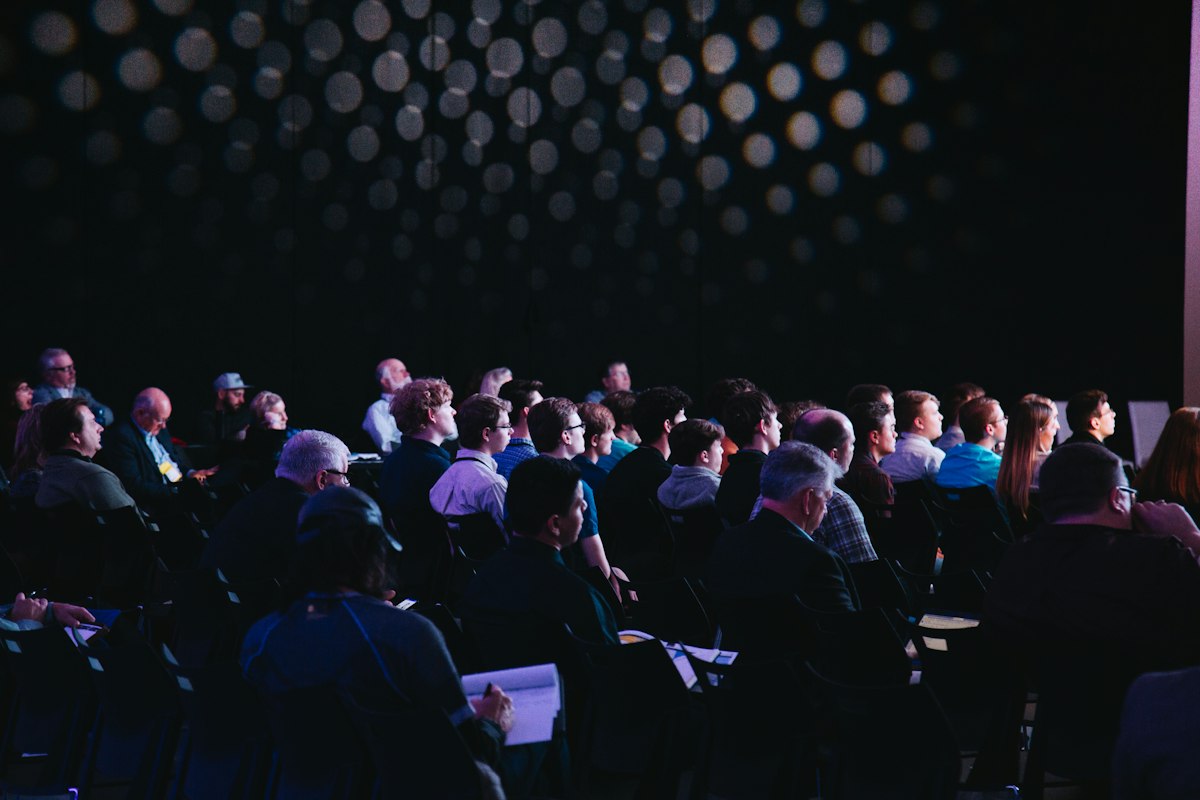
While the "Minds Mastering Machines" conference in Karlsruhe celebrates the latest achievements in Artificial Intelligence and Machine Learning, many Swiss SME managers are still grappling with the digitalisation of their core processes. This apparent gap between high-end research and daily operations is real and often frustrating. However, it's also a missed opportunity, as the innovations discussed there are not science fiction for large corporations but crucial levers for the efficiency and competitiveness of small and medium-sized enterprises – including those in Switzerland.
The heise report about the conference might seem irrelevant at first glance to the construction contractor from the Bernese Oberland or the trust accountant from Zurich. They talk about LLMs, Agentic AI, and deep neural networks. At the same time, current figures show that AI adoption in Swiss SMEs has risen from 22% in 2024 to 34% in 2026. Almost half of the SMEs here, precisely 45%, now consider AI a clear advantage for their business. This discrepancy between knowing the benefits and actual implementation is a clear signal: there's a need to translate complex matters into concrete, actionable steps.
The crucial question is not whether AI is coming, but how Swiss SMEs can pragmatically and risk-consciously integrate it into their daily operations. It's about separating the wheat from the chaff, ignoring the hype, and focusing on applications that deliver measurable results. This is the task we, as practitioners, face to strengthen Switzerland as a business location in the long term.
📊 Facts at a Glance:
- 45% of Swiss SMEs now consider AI an advantage for their business operations (kmu.admin.ch, 2026).
- The AI market saw a record investment of 243.9 billion US dollars in venture capital in 2025 (PitchBook, 2025).
- Germany plans to double its AI data centres by 2030 (Insurance Journal, 2026).
- AI adoption in Swiss SMEs rose from 22% (2024) to 34% (2026) (kmu.admin.ch, 2026).
How can Swiss SMEs concretely leverage current AI trends from conferences like 'Minds Mastering Machines' for their business?
By interpreting and adapting the presented developments not as distant future music, but as concrete opportunities for efficiency gains and new business models. The key lies not in understanding every technical detail, but in the ability to grasp the essence of an innovation and assess its potential relevance for one's own business model. A conference like "Minds Mastering Machines" offers an overview of the current state of the art. For SMEs, this means specifically looking for use cases that are already proven or close to market readiness and can be directly tailored to Swiss needs.
It's a fallacy to believe that one needs to read dozens of technical articles every week. Rather, it's about identifying the right sources and critically questioning the information. As Lukas Huber, founder of schnellstart.ai, has repeatedly observed in my practice: for every potential AI use case, whether it's an "AI Tax Mentor" or intelligent customer management, a comprehensive mix of sources is essential. This means not only consuming the glossy presentations from conferences but cross-referencing them with at least three external best practices from different contexts, a relevant book or trade journal, an online case study, and an academic paper. Only then can vendor bias be checked and scientific validation ensured.
For example, if new Large Language Models (LLMs) are presented at a conference that can summarise or generate text, a Swiss SME manager should ask: Can I use this to optimise my internal communication? Does it reduce the effort for marketing texts or creating quotes? What about data security and the protection of sensitive customer data under GDPR? The mere technical feasibility is often less relevant than pragmatic integration, considering local compliance requirements and the specific company culture.
💡 Recommendation: Prioritise Value, Not Hype
When evaluating new AI trends, focus on the direct added value for your company. Ask yourself: What specific problems does this technology solve for us? Which processes can become measurably more efficient with it? And how quickly can it be implemented under Swiss conditions (GDPR, hosting)? A "game-changer" is only that if it actually changes your business and isn't just buzzword-worthy.
The doubling of AI data centres in Germany by 2030 is a clear sign of the European relevance of these technologies. For Swiss SMEs, this means that the infrastructure for data-intensive applications is getting closer, and the scalability of AI solutions is becoming easier. It's no longer about the distant future but about the immediate present and the necessity to position oneself now. Those who set the course today will benefit from efficiency and new opportunities tomorrow.
Which practical applications of AI and ML are most relevant for Swiss SMEs to increase their competitiveness?
The greatest efficiency gains for Swiss SMEs are achieved through the automation of repetitive tasks, optimised customer interactions, and more precise data analyses in areas such as accounting, customer service, and marketing. It is often the unspectacular but time-consuming activities that can be optimised most quickly and effectively with AI. Think of the automatic classification and processing of incoming invoices, answering frequently asked customer questions through intelligent chatbots, or personalised customer outreach based on their purchasing behaviour.
A concrete example is the automation of document processing. Many SMEs spend hours manually entering and categorising invoices, delivery notes, or contracts. An AI solution can scan these documents, extract the relevant data, and transfer it directly into the ERP system. This not only saves 10+ hours of work per week but also drastically reduces the error rate. This is direct, measurable efficiency that translates into CHF.
In customer service, AI-powered tools can reduce waiting times and increase satisfaction. An intelligent chatbot that answers the most common questions relieves employees and allows them to focus on more complex inquiries. For personalisation in marketing, AI analyses customer data and suggests tailored offers, which can significantly increase conversion rates. Such applications are not science fiction; they are available today and successfully used in Swiss SMEs.
🚀 Practical Example: The "AI Tax Mentor" for Trust Companies
A medium-sized Swiss trust company we supported faced the challenge of efficiently managing the multitude of tax laws and adjustments and responding to client inquiries quickly and accurately. We implemented an AI-powered knowledge platform, the "AI Tax Mentor". This solution automatically searches and analyses the latest tax guidelines, court rulings, and technical articles (including Swiss specifics like cantonal differences). Trust accountants receive precise answers to complex tax questions at the push of a button, which previously required hours of manual research. This reduced research time by over 30% and increased the quality of advice, as all relevant information was immediately available. Employees could focus on strategic consulting instead of repetitive information gathering.
The acceptance and use of AI in Swiss SMEs are steadily increasing, from 22% in 2024 to 34% in 2026. This is a clear indication that the benefits are being recognised and utilised. This development leads to increased efficiency and competitiveness through automation and data analysis. It also shows that focusing on specific, problem-oriented AI solutions is the right path, rather than getting lost in generic "game-changer" promises.
Why should Swiss SMEs follow developments in AI and ML, especially regarding investments and future technologies?
Because ignoring these developments not only creates competitive disadvantages but also jeopardises the long-term existence of the company, while proactive investments can lead to significant market share gains. The AI market saw a record investment of 243.9 billion US dollars in venture capital in 2025. This enormous capital influx is driving development at a breathtaking pace. Those who fall behind will quickly be overtaken by more agile competitors who leverage new opportunities to operate more efficiently, faster, and with a greater customer focus.
It's not about investing in AI research yourself, but about understanding the trends and being willing to invest in proven, scalable solutions. Investments in AI are no longer optional; they are a strategic necessity. Germany plans to double its AI data centres by 2030. This shows that our neighbouring countries are investing heavily in the infrastructure that enables companies to use AI solutions. Swiss SMEs must ensure they have access to comparable, GDPR-compliant, and locally hosted services to avoid falling behind.
Following developments also means informing oneself about the risks and pitfalls. An ill-considered implementation without a clear strategy and without considering governance and compliance aspects can be costly. It is crucial to understand which data can be used for which AI application and how the models work transparently and comprehensibly. Only then can legal and ethical risks be minimised.
⚠️ Warning: Hype is a Poor Advisor
Don't be blinded by exaggerated promises or "game-changer" rhetoric. Many AI projects fail because they are launched without a clear problem statement, an insufficient data basis, or a lack of integration into existing processes. Poorly implemented AI not only costs money but also trust and valuable time. Rely on proven methods and practical advice that understands the Swiss context.
How Swiss SMEs Stay on Track: A Comparison of Options
The question is how an SME manager, with limited resources and a lot of daily business, can effectively absorb the necessary information about AI and ML. There are various paths, each with its own advantages and disadvantages. A blanket recommendation is out of place here, as the best option strongly depends on the company's internal expertise, budget, and strategic direction. What's important is a conscious decision based on one's own capabilities.
| Option | Advantages for SMEs | Disadvantages for SMEs | Relevance for "Minds Mastering Machines" |
|---|---|---|---|
| 1. Self-Study / Conference Attendance | Direct access to the latest trends; no external consulting costs; flexible time management; building foundational internal knowledge. | High time commitment; risk of being overwhelmed by technical details; difficulty filtering relevance for one's own business; no direct implementation support. | Minds Mastering Machines is one such source. Good for strategic orientation, but requires significant personal effort for transfer. |
| 2. External Consulting / Implementation Partner | Targeted expertise and experience; rapid implementation of solutions; focus on measurable results; consideration of compliance and governance (GDPR). | More costly; dependence on external partner; knowledge transfer into the company must be actively managed. | Partners translate conference trends into concrete applications and handle implementation, relieving the SME. |
| 3. Internal AI Teams / Dedicated Employees | Deep understanding of company-specific needs; maximum control over projects; long-term knowledge building within the company. | Very high costs for recruitment and training; long onboarding times; difficult for smaller SMEs to attract and retain top talent. | Internal teams can directly absorb and implement conference content, but this option is unrealistic for most Swiss SMEs. |
| 4. Industry Associations / Specialist Webinars | Targeted information for one's own industry; often more practical than general conferences; opportunity for peer exchange; cost-effective. | May be less in-depth than international conferences; often focuses on best practices rather than the latest research; not always tailored to the Swiss context. | Complements conferences by highlighting industry-specific use cases that are only mentioned peripherally at conferences. |
The "Minds Mastering Machines" conference is an important indicator of the direction the AI world is moving. However, for Swiss SMEs, it is crucial to interpret these signals correctly and translate them into concrete actions. The focus should always be on pragmatic benefits and secure implementation, taking into account the specific Swiss framework conditions. Investments in AI are no longer just an option for large corporations; they are a necessity for any company that wants to survive and grow in the long term.
✅ Tip: Your Personal AI Information Filter
Create a small but effective list of information sources that you check regularly. This could include industry-specific newsletters, selected Swiss media, or podcasts. Supplement this by attending webinars or workshops directly tailored to the needs of SMEs (like the Swiss AI Summit). Consistently filter information based on the question: "How does this specifically help me save time or costs, or win new customers?" Ignore anything that doesn't answer this question.
Conclusion
The world of Artificial Intelligence is evolving rapidly, and conferences like "Minds Mastering Machines" are showcases of this dynamism. For Swiss SMEs, it is essential to understand these developments not as a distant show, but as an immediate opportunity and challenge. Those who act now and implement AI pragmatically will secure a decisive competitive advantage in an increasingly digitised market.
This is less about chasing every technological hype and more about strategic implementation tailored to one's own operations. The facts are clear: AI is not a trend, but a reality that increases efficiency and opens up new possibilities.
✅ AI is not a luxury, but a necessity: The adoption of AI is crucial for the future competitiveness of Swiss SMEs.
✅ Focus on added value: Prioritise applications that deliver measurable results and solve specific problems, rather than chasing generic "game-changers".
✅ Consider the Swiss context: When implementing, pay attention to GDPR compliance, secure hosting in Switzerland, and practical solutions for your industry.
Would you like to learn how to identify and securely implement AI potential in your company? Contact us for a no-obligation initial consultation.
Frequently Asked Questions
Was ist die 'Minds Mastering Machines' Konferenz?+
Die 'Minds Mastering Machines' ist eine Konferenz, die sich mit den neuesten Errungenschaften in Künstlicher Intelligenz und Machine Learning beschäftigt.
Welche Herausforderungen haben Schweizer KMU bei der Digitalisierung?+
Viele Schweizer KMU kämpfen noch mit der Digitalisierung ihrer Kernprozesse und verpassen dadurch die Chancen, die KI-Innovationen bieten.
Sind KI-Innovationen für Schweizer KMU relevant?+
Ja, die auf Konferenzen diskutierten KI-Innovationen sind keine Science-Fiction für Grosskonzerne, sondern entscheidend für die Zukunftsfähigkeit von KMU.
Related Articles



Newsletter
Receive our weekly briefing on Swiss AI & Deep Tech.